
IPv4 vs. IPv6: Understanding the Differences and Why They Matter
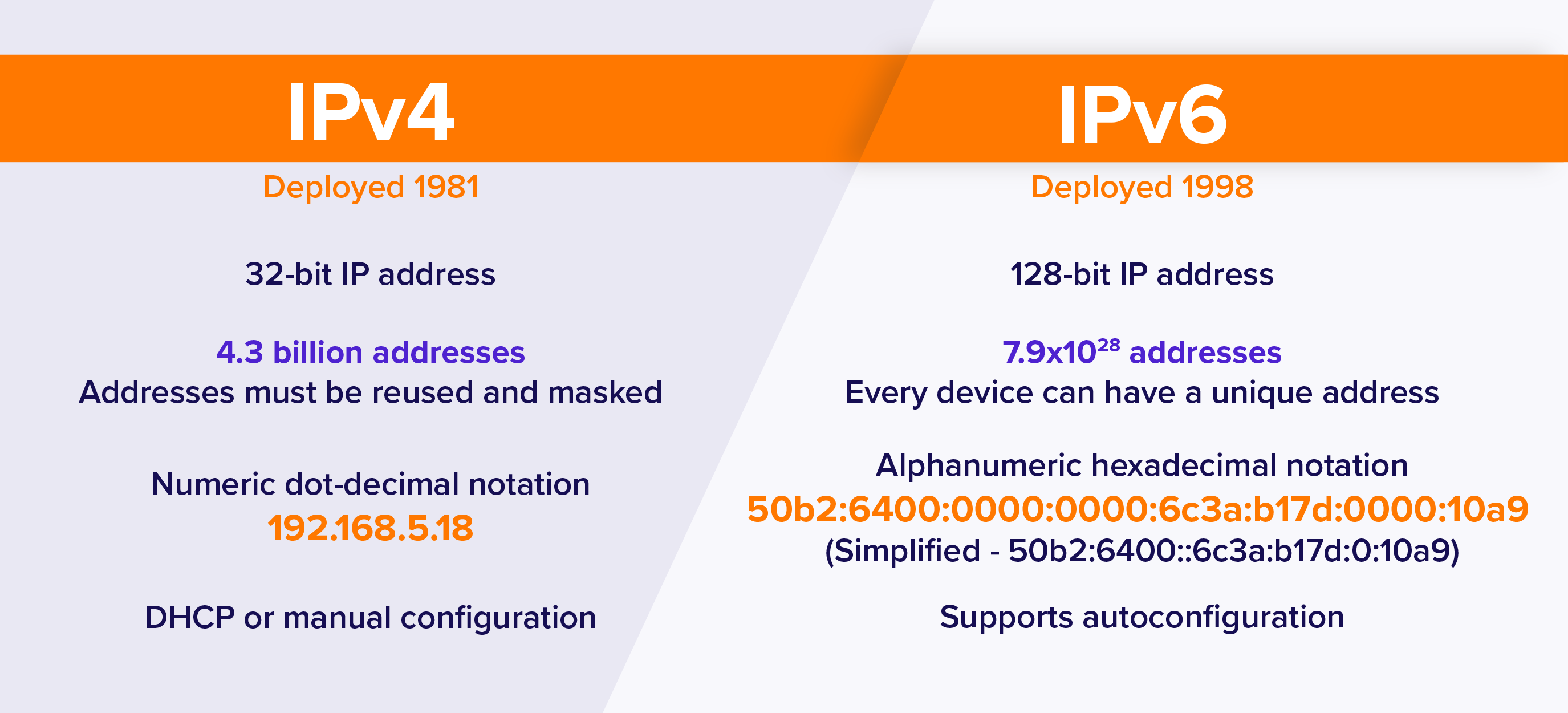
IPv4 vs. IPv6 – The Internet is built on a foundation of protocols that allow devices to communicate with each other, with Internet Protocol (IP) being one of the most critical. The two versions in widespread use today are IPv4 and IPv6. This article explores the differences between these protocols and why they are important for the future of the Internet.
What is IPv4?
IPv4 (Internet Protocol version 4) is the fourth iteration of the Internet Protocol, designed to identify devices on a network through an addressing system. IPv4 uses a 32-bit address scheme allowing for a total of 4.3 billion unique addresses. An example of an IPv4 address is 192.168.1.1.
Key Features of IPv4:
- Address Format: 32-bit numeric address written in decimal format.
- Example Address: 192.168.1.1.
- Address Capacity: Approximately 4.3 billion addresses.
- Header Complexity: Simplified header structure, making it easier to process.
- Deployment: Widely deployed and supported by most network infrastructure and devices.
What is IPv6?
IPv6 (Internet Protocol version 6) is the most recent version of the Internet Protocol, developed to address the exhaustion of IPv4 addresses. IPv6 uses a 128-bit address scheme, significantly expanding the number of available addresses to approximately 3.4×10^38 unique addresses. An example of an IPv6 address is 2001:0db8:85a3:0000:0000:8a2e:0370:7334.
Key Features of IPv6:
- Address Format: 128-bit alphanumeric address written in hexadecimal format.
- Example Address: 2001:0db8:85a3:0000:0000:8a2e:0370:7334.
- Address Capacity: Approximately 3.4×10^38 addresses, providing ample room for future growth.
- Header Complexity: More complex header structure, but designed for efficiency and extensibility.
- Deployment: Growing deployment, with increasing support across network infrastructure and devices.
Differences Between IPv4 and IPv6
1. Address Length and Format:
- IPv4: 32 bits, represented as four decimal numbers separated by dots.
- IPv6: 128 bits, represented as eight groups of four hexadecimal digits separated by colons.
2. Address Space:
- IPv4: Limited to about 4.3 billion addresses, leading to address exhaustion.
- IPv6: Vast address space capable of accommodating the growing number of Internet-connected devices.
3. Header Complexity:
- IPv4: Simpler header with 12 fields, making it easier to process but less flexible.
- IPv6: More complex header with 8 fields designed for efficient processing and extensibility.
4. Configuration and Management:
- IPv4: Supports both manual and DHCP-based address configuration.
- IPv6: Supports auto-configuration and stateless address autoconfiguration (SLAAC), reducing administrative overhead.
5. Security:
- IPv4: Security features are optional and depend on additional protocols like IPSec.
- IPv6: IPSec is built into the protocol, providing mandatory support for encryption and authentication.
6. Network Configuration:
- IPv4: Requires NAT (Network Address Translation) to handle address shortages, which can complicate network configurations.
- IPv6: Eliminates the need for NAT, simplifying network design and improving performance.
7. Broadcast and Multicast:
- IPv4: Uses broadcast addressing to send data to all nodes in a network segment.
- IPv6: Replaces broadcast with multicast and anycast, improving efficiency and reducing network traffic.
Why IPv6 Matters
1. Address Exhaustion: IPv4 address exhaustion is a significant concern as the number of Internet-connected devices continues to grow. IPv6 addresses this issue with its vast address space, ensuring the Internet can continue to expand.
2. Improved Performance and Efficiency: IPv6’s streamlined header and elimination of NAT can lead to improved network performance and simpler network management.
3. Enhanced Security: With built-in IPSec, IPv6 provides more robust security features, making it more suitable for the modern Internet environment where security is a top priority.
4. Future-Proofing: Adopting IPv6 ensures that networks are prepared for future growth and technological advancements, such as the Internet of Things (IoT), which relies on a large number of IP addresses.
Transitioning from IPv4 to IPv6
Dual Stack Implementation:
- Run IPv4 and IPv6 simultaneously, allowing gradual transition and ensuring compatibility with both protocols during the transition period.
Tunneling:
- Use tunneling techniques to encapsulate IPv6 packets within IPv4 packets, facilitating communication between IPv6-enabled and IPv4-only networks.
Translation:
- Implement translation mechanisms to allow direct communication between IPv4 and IPv6 networks.
Conclusion
While IPv4 has served the Internet well for decades, the transition to IPv6 is essential for supporting the continued growth and evolution of the Internet. Understanding the differences between IPv4 and IPv6, and why they matter, is crucial for network administrators and organizations planning their network strategies for the future. Embracing IPv6 ensures that networks remain scalable, secure, and ready for the next wave of technological innovation.